|
IEEE ICMA 2027 Conference
Plenary Talk 1
Nanometer-Gap MEMS-Based Frequency Control
for Intelligent Systems
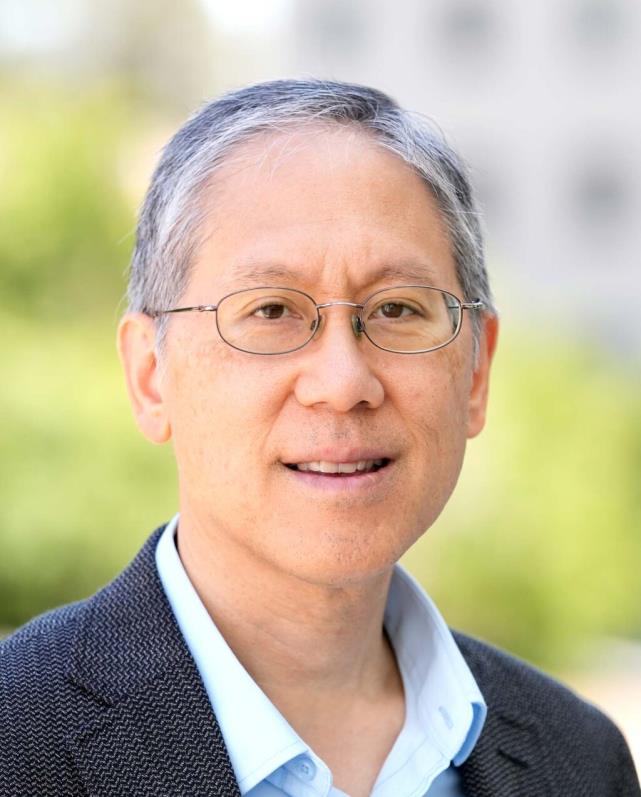
Clark T.-C. Nguyen, Ph.D.
Executive Associate Dean, College of Engineering
Professor, Electrical Engineering & Computer Sciences
Faculty Director, Berkeley Sensor & Actuator Center
University of California, Berkeley
https://bsac.berkeley.edu/
Abstract:
The use of mechanics to set and shape signal frequency content is ever-present in applications that permeate society, from the oscillators that tell time and synchronize communications to the front-end filters that outright enable our smartphones. Microelectromechanical systems (MEMS) have played no small role in the advancement of these capabilities, and this technology continues to shape what’s to come. Specifically, MEMS-based oscillators using nano-scale transducer gaps have come a long way, from early days when smaller was simply deemed less stable, to today’s devices that sport frequency stability commensurate with the stringent needs of artificial intelligence and capable of challenging atomic clocks in certain application spaces. Since good frequency stability generally permits excellent sensors, it is not surprising that sensors have recently taken center stage for this technology. Here, nano-scale approaches to suppressing environmental interference, e.g., due to temperature changes, may soon enable leaps in capabilities, such as faster brake response and hydrogen tank health monitoring for future fuel cell vehicles, both of which benefit from sensors that can operate over wide temperature ranges. Meanwhile, on the signal processing front, mechanical circuit approaches employing periodic switching over nanometer-scale gaps have lowered communication dynamic range requirements to levels that now permit low-bit-rate all-mechanical radios that can listen continuously with no battery drain, only consuming power when valid bits arrive.
This talk will use examples like the above to chronicle how small-gapped MEMS-based frequency control technology has and continues to transform intelligent system capabilities.
Clark Nguyen is a Professor in the Electrical Engineering and Computer Sciences (EECS) Department at the University of California at Berkeley, where he is presently the Executive Associate Dean of the College of Engineering, the Faculty Executive Director of the Berkeley Sensor & Actuator Center (BSAC), and the Conexant Distinguished Professor of Electrical Engineering and Computer Sciences. He is best known for pioneering work on integrated MEMS-based oscillators, filters, and resonators, which have enabled advances in wireless communication systems, and which enable the MEMS-based timing devices now used in countless electronic systems, including smartphones, base stations, and mobile computing devices. He is the Founder of Discera, the first company to commercialize MEMS-based timing oscillators that upon acquisition left in its wake products that still sell in considerable volume (via Microchip) as well as numerous continuing companies in this space. In mid-2002, Nguyen joined the Defense Advanced Research Projects Agency (DARPA), borrowed from academia on an IPA, where he served for four years as the Program Manager of ten different MEMS-centric programs in the Microsystems Technology Office of DARPA.
Professor Nguyen is an IEEE Fellow and the recipient of the 2006 IEEE Cady Award and the 2017 IEEE Robert Bosch Micro and Nano Electromechanical Systems Award. From 2007 to 2009, he served as a Distinguished Lecturer for the IEEE Solid-State Circuits Society. Prof. Nguyen was the Technical Program Chair of the 2010 IEEE Int. Frequency Control Symposium and a Co-General Chair of the 2011 Combined IEEE Int. Frequency Control Symposium and European Frequency and Time Forum, as well as a Co-General Chair of the 2017 IEEE Int. Micro Electro Mechanical Systems Conference. Nguyen served from 2016-2017 as the President of the IEEE Ultrasonics, Ferroelectrics, and Frequency Control Society, and presently serves as the President of the IEEE MEMS Technical Community.
|